Entering and exiting the roles that are assigned to us, or that we seek, or simply that we are, never fully defined or acquired, we are connected to that identification that cinema often fosters in us as spectators, through its narratives and images. This happens to adults, children, and adolescents alike, with a frequency that leads us to identify with the hero of the film that captivates us, creating a powerful and deeply rooted connection in our psyche, one that provokes pleasure and interest.
In Goliarda Sapienza’s (1924-1996) book, *Io, Jean Gabin*, through the writer’s identification with the famous actor, Goliarda constructs various layers of roles: there is the mythical one of a young girl watching films and identifying with the symbolic actor who, in that case, also represented a way of loving women. One layer pulls the other: the beloved actor in the beloved film—*Le Quai des brumes* (1938) by Marcel Carné—Goliarda’s writing, her childhood in Sicily, in Catania, the
stories of her lived experiences; everything intertwines and connects, the writing itself becoming more than just narration, becoming the story itself, culminating in the creation of those masterpieces that are her novels.
Identification is a constant in art and in artists. It is through this that we ‘steal’ the craft, entering and exiting multiple lives, constructing existence. One of the foundational characteristics of art in
all its forms has been to weave similarities, blending and recreating them to take possession of them and endow them with new and different strength. Whether it’s ancient art or architecture in the Renaissance, or the various „-isms“ that have combined the different representations of the chosen historical moment, we are dealing with this fundamental practice of making art. But identification also pertains to life itself, whether it’s Marcel Duchamp playing chess, an actor or actress performing different roles imposed by a film script, or an irreproachable employee transforming into a thief. Art, as a component of life, makes us reflect and offers us this multiplicity of feeling and seeing, which only serves to heighten, in every generation and every human being, this complexity of feeling oneself in the other(s), perhaps reminding us that we are shaped by time and memory, by the future and the past, in the continuous exchange of the here and now.
Why Jean Gabin? A prominent film scholar like Noël Simsolo reflects on the importance of Jean Gabin as a true noir icon, distant from the expansive sentimentality of French poetic realism. “What strikes me,” he writes, “is his almost pathological interiority. A mute suffering in the face of decay, corruption, and vice. His acting shifts from total
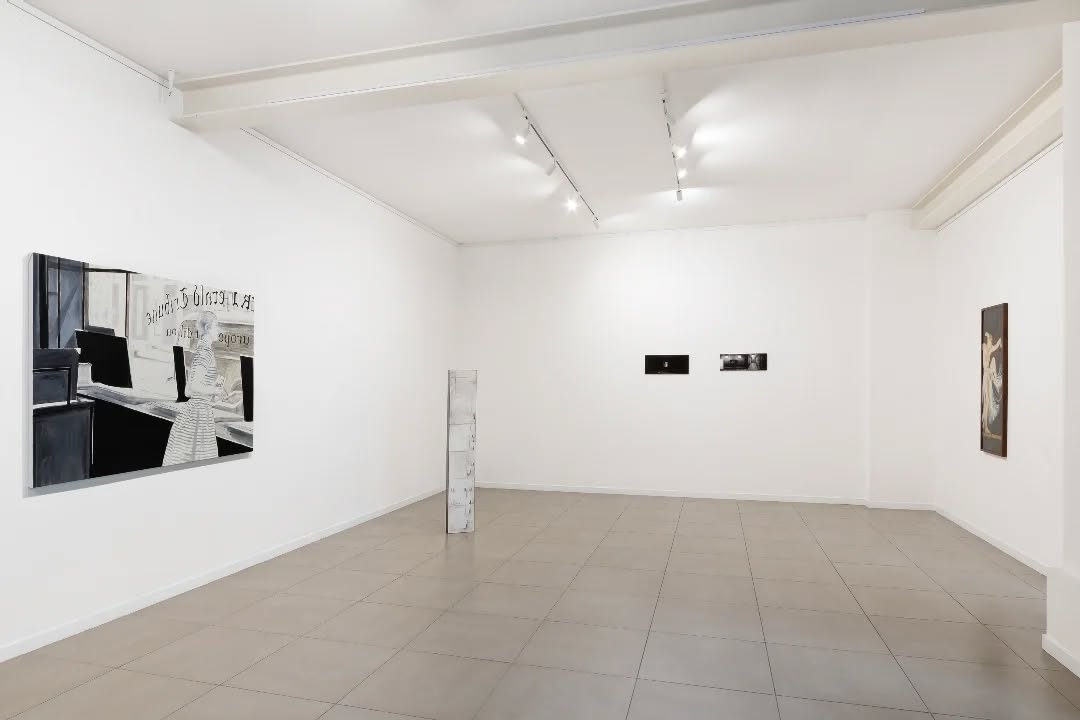
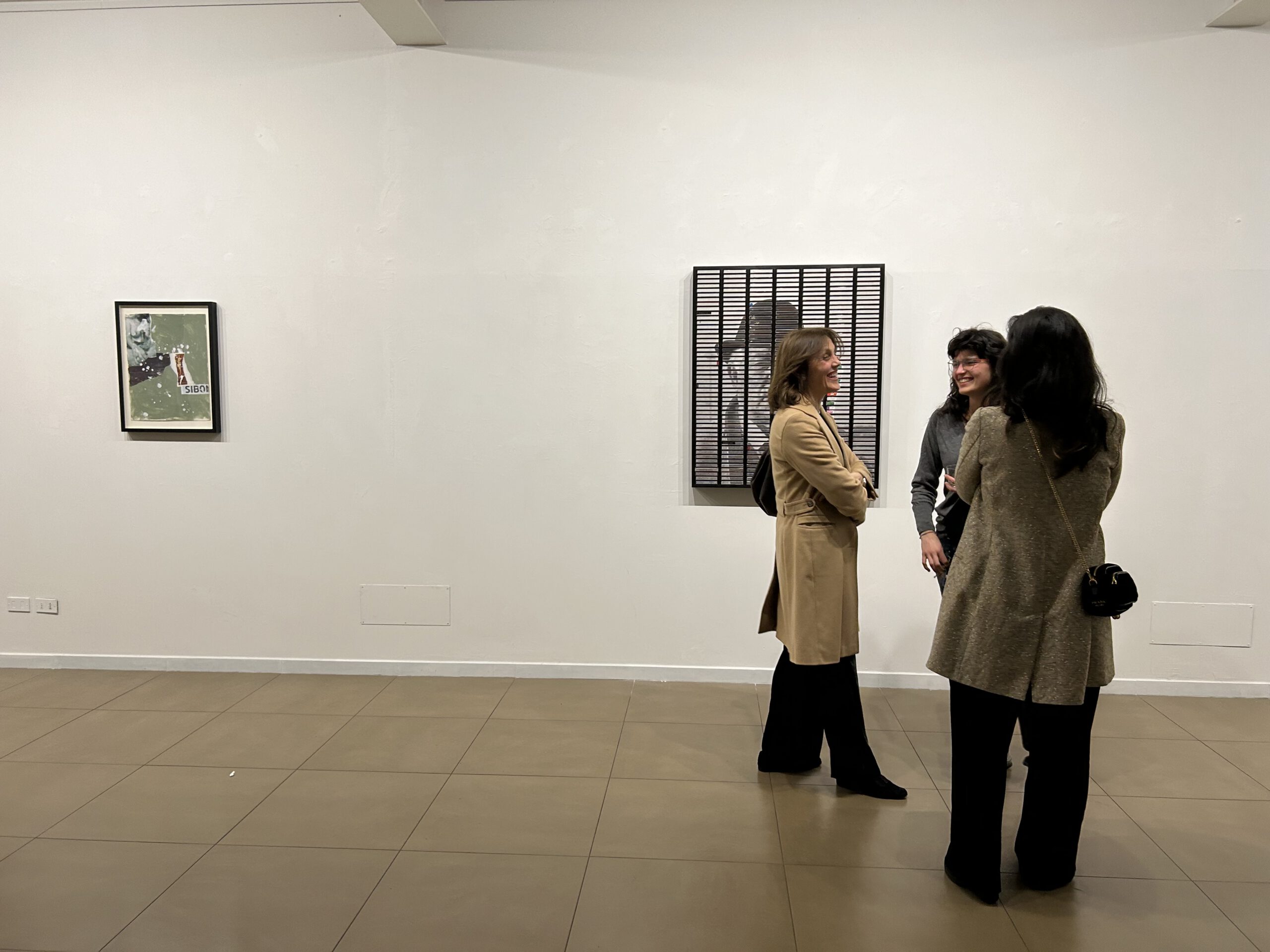
restraint to explosions of furious energy of shocking authenticity. This way of inhabiting a role would influence John Garfield, Burt Lancaster, and Laurence Tierney. These noir cycle actors knew his films and admired the modernity of his acting.” Bearing in mind this modernity of role and the actor’s ability to identify with it, we pay homage to his name through that same identification that Goliarda Sapienza captured in her novel, which for us serves as the foundation for a possible discourse on art today. The invited artists, each with their own personality, interpret their roles, whose presence, intertwined with that of others, creates a new subject, a new organism that we call a show, but which in reality is like the composition of a film, where a narrative—linear or not—unfolds, questioning and astonishing us, setting a rhythm that is that of art and artists. And of the world.
Text: Pietro Finelli
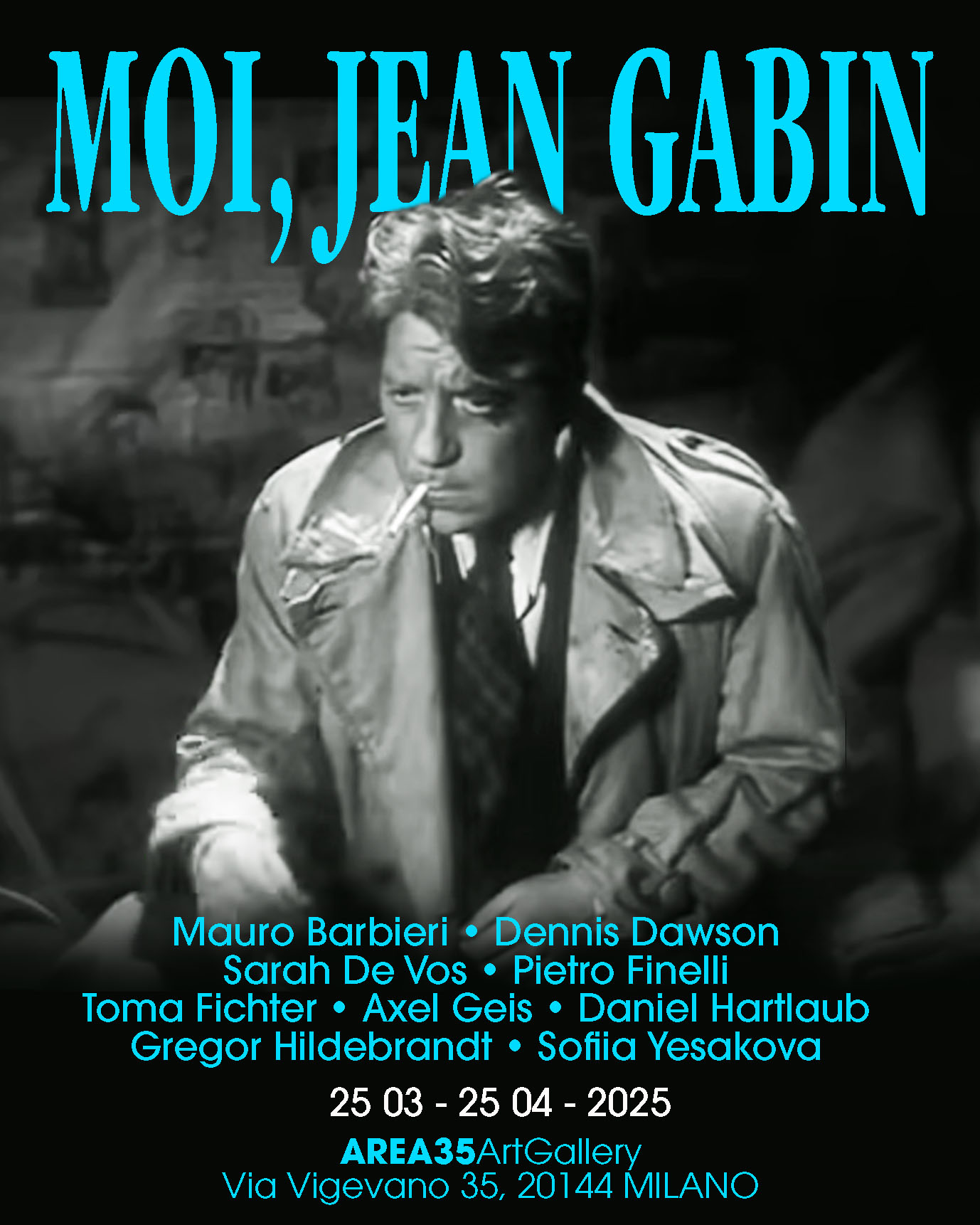
MOI, JEAN GABIN
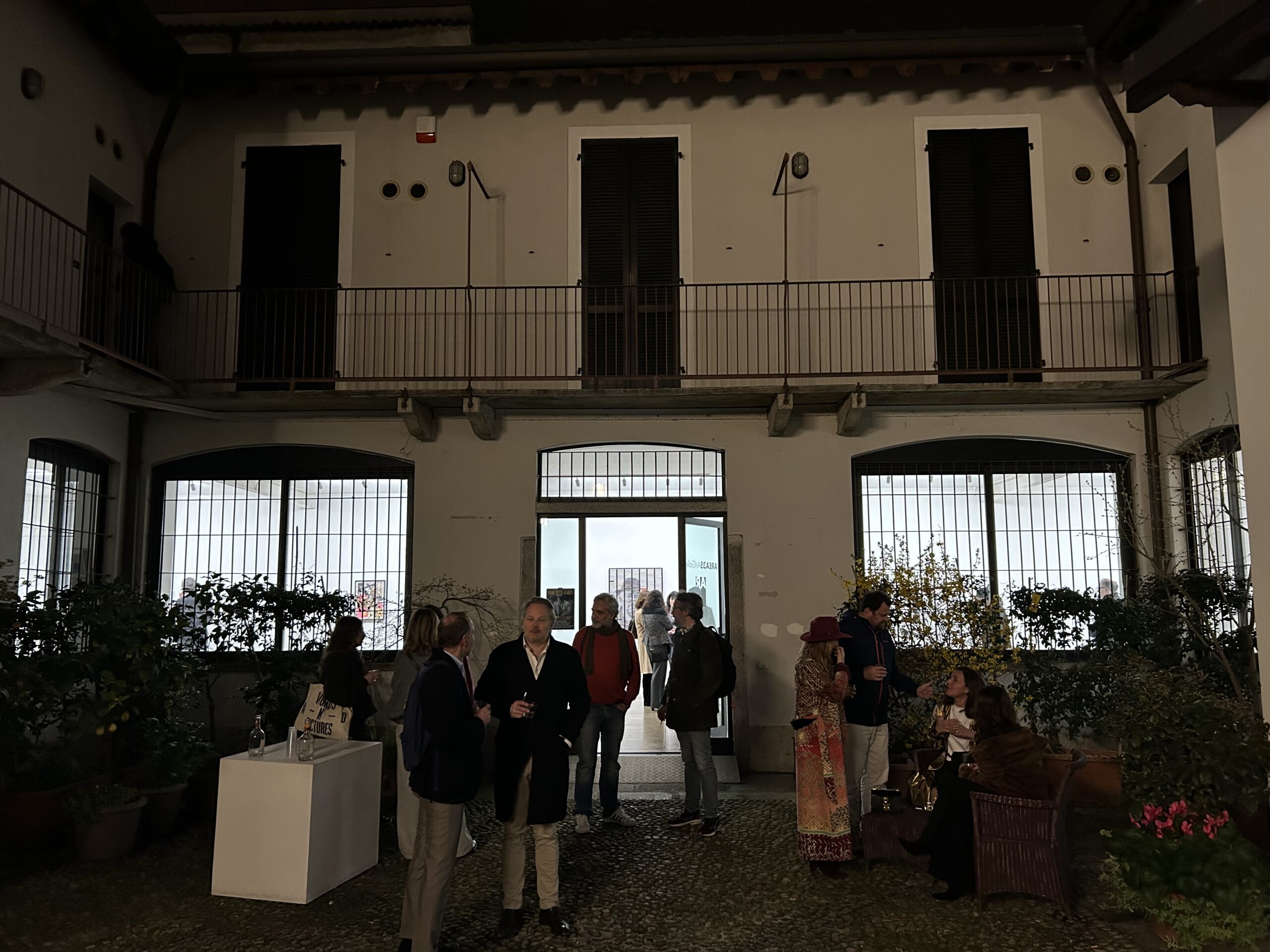
at Area35 Art Gallery Milano, Italy
Group exhibition
2025
Black Drawings
Artists
Mauro Barbieri
Dennis Dawson Sarah De Vos
Pietro Finelli
Toma Fichter
Axel Geis
Daniel Hartlaub
Gregor Hildebrandt
Sofiia Yesakova
Press contact
Valentina Malanot valentinamalanot@gmail.com
Contact: Area35 Art Gallery Tel. 339 391 6899
info@area35artgallery.com| www.area35artgallery.com
Courtesy
Gallery FROSCH&CO – New York
Galerie Emmanuel Perrotin – Paris
Gallery Sofie Van de Velde – Antwerpen
Gallery Wentrup – Berlin
Gallery 201@105 – New York